Bold and Easy: Thick-Line Coloring for Little Hands
A page can make the first move easier
Thick-line coloring is not a magic shortcut, and it does not need a grand claim behind it. It is simply a drawing style that gives young children more visual room to work with. A bold outline is easy to notice. A large enclosed shape is easier to return to after a crayon wanders. A single friendly subject offers a clear starting point.
That matters because early coloring is wonderfully untidy. Children may grip a crayon in different ways, press with all their energy, swap hands, or focus on one tiny patch of paper. The goal is not a neat finished picture. It is a comfortable chance to explore color, pressure, movement and choice.
What makes a page bold and easy
At CrayonSprout, the line art stays black and the subject stays central. We avoid busy backgrounds, decorative textures and piles of tiny shapes on the toddler pages. A snail gets one enormous spiral. A daisy gets six wide petals. A toy car gets two very large wheels. Each detail is intentional enough to notice, but not so small that it takes over the page.
This visual simplicity is also practical for printing. Clear black vector lines stay crisp in a Letter or A4 PDF, and they do not ask a home printer to fill a page with heavy color. Choose the paper size that matches your printer, print at 100 percent, and the page will keep the roomy proportions it was drawn with.
Let children lead the color choices
There is no correct color for a snail or a daisy. Giving a child a few crayons and a page is often more useful than explaining every part first. You might ask, “Which part do you want to color?” or simply sit alongside them with your own page. If color goes outside the line, the picture is still theirs.
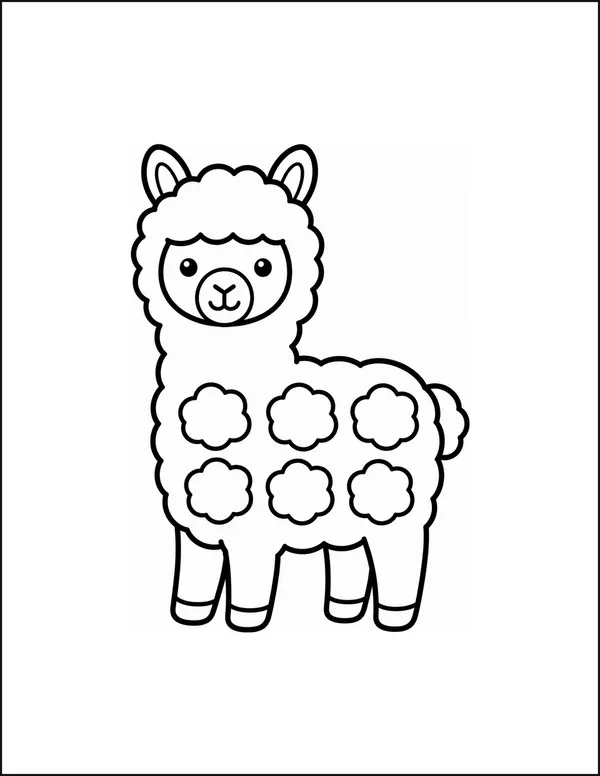
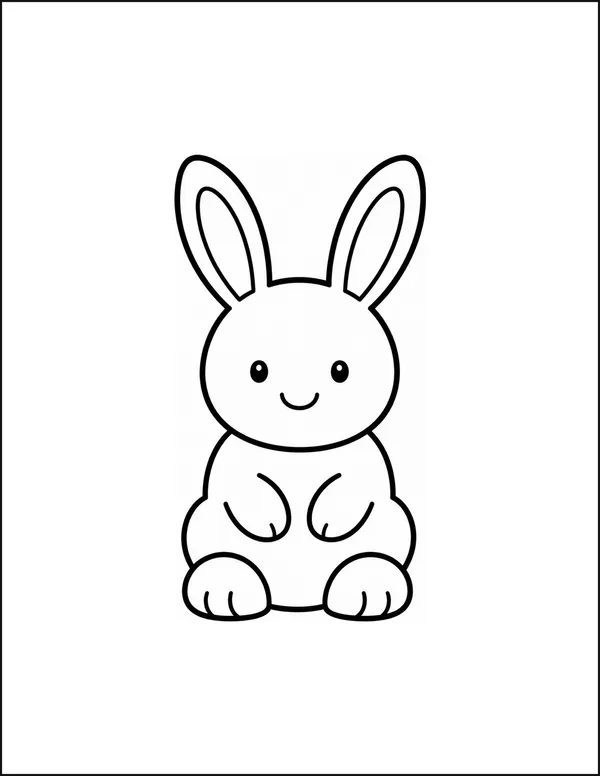
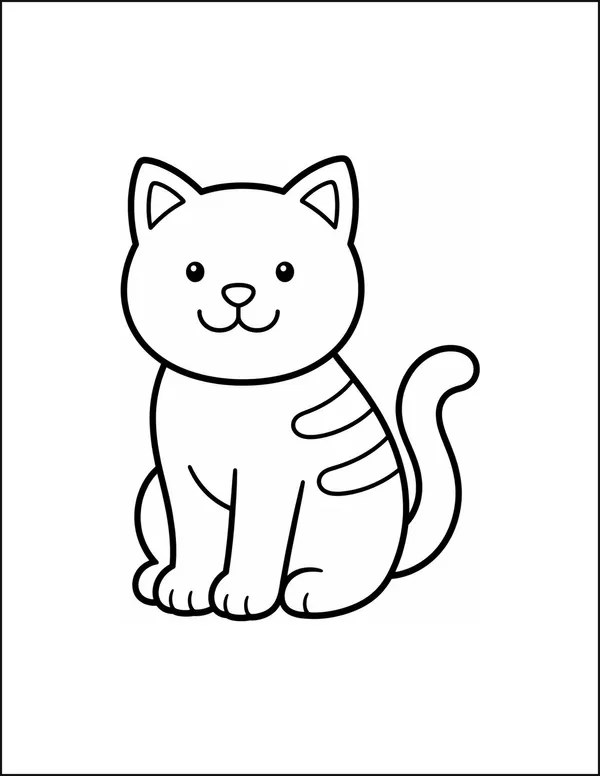
For a next activity, try the alpaca, bunny, or cat. Each one offers a bold shape, a simple detail, and a calm way to make a mark.
Make room for the mark
A thick outline cannot make coloring easy by itself. The rest of the drawing matters too. A page with chunky lines but twenty small objects can still feel crowded. That is why the early CrayonSprout pages keep one main subject in the middle of the sheet. A child can see where the picture begins and ends before choosing a crayon.
At a kitchen table, try placing the page sideways or turning it as the child works. There is no need to keep the paper in one correct orientation. A car wheel may be easier to color from the side; a snail shell may invite a slow circular motion. Adults can join in with a second page, but it helps to leave the child’s page as their own rather than filling in the spaces they miss.
Print settings are part of the style, too. Use actual size, not a reduced fit-to-page setting, so broad lines stay broad. Pick Letter for Letter paper and A4 for A4 paper. A black-and-white option on the printer is enough because the artwork is black line art; children supply all the color themselves.
There is no promise that a particular page will hold attention for a certain time or teach a particular skill. Children arrive with different interests and different ways of holding a crayon. Thick-line pages simply remove a few unnecessary obstacles. If one page is abandoned after a minute, try a different familiar subject another day. The useful part is that the invitation stays simple.
The same page can also be used in different ways without adding supplies. Ask a child to find the largest space, to choose one color before another, or to tell a tiny story about the picture. None of these prompts need an expected answer. They just give a quiet moment a little language if the child wants it. When they do not, silence and coloring work perfectly well together.
Keep an eye on comfort rather than outcome. A blunt crayon can be easier to manage than a sharp pencil, and a clear table gives an elbow somewhere to rest. If the paper moves, a small piece of removable tape at the top can help. These are ordinary practical adjustments, not rules. The picture remains a simple place for a child’s own marks.